À partir de 1140 €

All-Inclusive Moving

Moving to Bangkok

Moving to Bangkok involves much more than transporting your personal belongings. For a long-term move to Thailand, choosing the right neighborhood, living close to the BTS Skytrain (elevated rail system) or MRT (Bangkok metro), finding housing suited to the heat and humidity, and having access to major private hospitals all directly affect your quality of life. Drawing on experience with international moves to Bangkok, this guide offers practical advice to help you plan your arrival and settle in successfully.

4.9
99 déménagés
97 to 112 jours
Moving to Bangkok

Moving to Bangkok involves much more than transporting your personal belongings. For a long-term move to Thailand, choosing the right neighborhood, living close to the BTS Skytrain (elevated rail system) or MRT (Bangkok metro), finding housing suited to the heat and humidity, and having access to major private hospitals all directly affect your quality of life. Drawing on experience with international moves to Bangkok, this guide offers practical advice to help you plan your arrival and settle in successfully.

4.9
99 déménagés

Transit Time: 97 to 112 jours

Preparing for your move to Bangkok

Plan your move to a metropolis where journey times vary widely

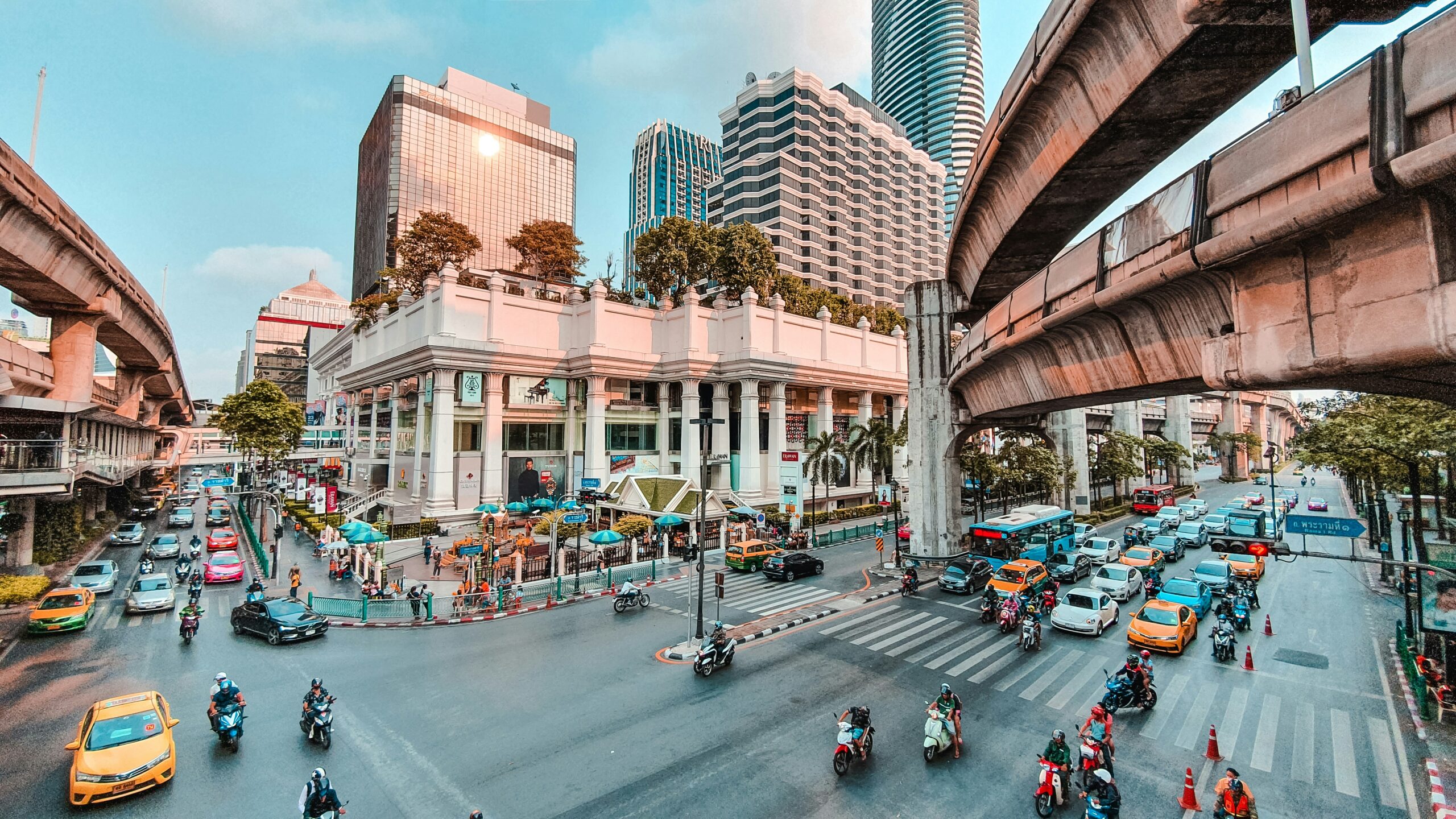
Moving to Bangkok is not simply a matter of comparing housing costs. For a long-term stay, limiting daily travel is often the first priority. A journey of just a few kilometers can take more than an hour depending on traffic. Rather than focusing solely on affordable rent, choose a neighborhood with convenient access to shops, healthcare facilities and the BTS Skytrain (elevated rail) or MRT (Bangkok metro).

Take time to explore your future neighborhood

Temporary accommodation for two to four weeks generally gives you time to compare different areas before signing a lease. Use this period to test journeys at different times, assess the sidewalks, check how accessible stations really are and see how heavy rain affects local streets. In Bangkok, a property advertised as “near the BTS” may be at the far end of a soi, a side street that can be long or unpleasant to walk along in the heat.

Prepare your first administrative steps after arrival

During your first few days, arrange the essentials: choose suitable health insurance, identify the nearest private hospital, open a bank account if your circumstances allow and obtain a local mobile plan. The TM30 notification, which records your residential address with the Thai authorities, is generally filed by the landlord or accommodation provider, but it is wise to confirm that this has been done.

Consider the climate when choosing a home

Experience with international moves to Bangkok shows that everyday comfort also depends on details rarely visible in property listings. Before choosing a home, check the air-conditioning units, look for signs of damp, inspect street drainage during the rainy season and favor buildings that remain easily accessible throughout the year. These factors often matter more to your quality of life than the building’s advertised prestige.

Best neighborhoods in Bangkok

Choose a neighborhood around your daily routine

For those living in Bangkok, the best neighborhood is not necessarily the most prestigious. What matters most is your lifestyle, ease of getting around, proximity to shops and healthcare, and actual commuting times. The Sukhumvit corridor, served by the BTS Skytrain, remains a popular choice among expats, but each area offers distinct advantages.

Phrom Phong, Thong Lo and Ekkamai: sought-after areas

Phrom Phong offers a particularly comfortable setting for long-term residents thanks to its shopping malls, international stores, Benchasiri Park and access to several private hospitals. Thong Lo attracts residents seeking an upscale lifestyle, with many restaurants, cafés and modern residences. More residential in character, Ekkamai often provides an excellent balance of accessibility, tranquility and quality of life while remaining close to the center.

On Nut and Ari: two popular alternatives

On Nut generally offers more affordable rents while retaining BTS access, appealing to expats seeking a balance between budget and convenience. Ari is valued for its residential atmosphere, cafés, green spaces and quieter pace than parts of Sukhumvit. These neighborhoods offer different lifestyles and are worth visiting before deciding.

Families often prefer other areas

Families frequently choose Bang Na when their children attend Bangkok Patana School, while Nichada Thani, in neighboring Nonthaburi province, is especially popular among families connected to the International School Bangkok (ISB). For retirees or couples without children, however, these areas can mean greater dependence on a car and longer trips to central Bangkok.

  • Measure the actual walking time to the BTS or MRT station rather than relying on the advertised distance.
  • Visit the area during the day, in the evening and after heavy rain.
  • Identify shops, pharmacies and healthcare facilities within walking distance.
  • Check whether the property lies at the far end of a soi, a side street that may complicate everyday journeys.

A common mistake is choosing a property simply because it is in Sukhumvit. Depending on the specific soi, the actual distance to the station, sidewalk conditions and local traffic, two nearby residences can offer very different levels of everyday convenience.

Starting from

1140 €
99+

Join the 1500+ expats who trusted us!

Adrien, a moving expert with 10 years of experience, knows this destination inside out!
Our team can assist you in:
🇫🇷 Français • 🇬🇧 English • 🇪🇸 Español • 🇮🇹 Italiano • 🇵🇹 Português • 🇦🇪 العربية

Main Services

Living in Bangkok

Housing, cost of living, jobs, schools, transportation and practical advice: discover what you need to know to plan your move and everyday life in Bangkok.

Housing and Cost of Living

Furnished homes can reduce the volume you need to ship

In Bangkok, many condominiums offered for long-term rental are already furnished and equipped. Before arranging your international move, it is therefore best to find your accommodation first and determine which furniture and personal belongings you truly need. This often reduces shipping volume and helps optimize the overall cost of moving.

Choose the shipping option that suits your plans

If you are shipping only a few pieces of furniture and personal effects, a shared container is generally the more economical solution. A dedicated container is better suited to shipping an entire household. If you will not need certain belongings immediately, you can also consider storage solutions at your departure point in Europe.

Check condominium-specific moving restrictions

Before signing a lease, ask about the building’s moving rules. Many condominiums require advance booking of the service elevator, a designated delivery slot or a deposit to cover potential damage to common areas. Buildings at the end of a soi or on a narrow street may also require a smaller vehicle for final delivery.

Calculate the true cost of housing

Your budget goes beyond the rent. Air-conditioning, condominium charges, maintenance of certain facilities and imported products can significantly increase living costs. Suitable health insurance is also important: Bangkok’s private hospitals provide high-quality care, but treatment can be expensive without adequate coverage.

International Schools and Family Life

Choose the school before choosing your home

For families moving to Bangkok, school choice often determines the best neighborhood. Major international schools are spread across the metropolitan area, including the Lycée Français International de Bangkok (LFIB) in Wang Thonglang, NIST International School near Asok, Bangkok Patana School in Bang Na and the International School Bangkok (ISB) in Nichada Thani, Nonthaburi province. Before signing a lease, check admissions availability and actual journey times.

Focus on travel time rather than distance

In Bangkok, even a few kilometers can reshape your family’s routine. Traffic jams, changes between transport lines and school-bus schedules can significantly lengthen journeys. Testing the route between a prospective home and the school on a weekday morning can prevent unpleasant surprises after moving.

Budget for the full cost of schooling

First-year costs generally extend well beyond tuition fees. Include application and registration fees, any deposits, uniforms, school transportation, meals and extracurricular activities. For many expat families, education is one of the largest items in the annual budget.

Make everyday family life more comfortable

Experience shows that a home close to school or a school-bus stop often improves quality of life more than a prestigious residence farther away. Shorter journeys leave more time to enjoy Bangkok’s services, green spaces and activities while reducing the fatigue of daily commutes.

Explore major cities in Thailand

Jobs and businesses in Bangkok

Bangkok is Thailand’s main hub for international employment

Although retirees are a key audience, many people moving to Thailand are also continuing their careers, taking on consulting assignments or accompanying a working partner. Bangkok remains the country’s leading center for skilled employment, with regional headquarters, banks, consulting firms, industrial groups and technology companies concentrated in the metropolitan area. Silom, Sathorn, Ploenchit, Asok, Rama IX and Ratchadaphisek are important business districts. Major Thai groups such as CP Group, PTT, Central Group and Siam Cement Group operate alongside international businesses including L’Oréal, Nestlé, Google, Microsoft, AWS and Deloitte.

Growth sectors are often highly specialized

Opportunities are particularly concentrated in digital technology, data centers, cloud services, cybersecurity, finance, private healthcare, international education and regional roles covering ASEAN markets. Many engineers and executives also work at industrial sites in Samut Prakan, Chonburi or Rayong while living in Bangkok. Confirm your exact workplace before choosing a home: an attractive address in Sukhumvit may be impractical if you regularly travel to the Eastern Economic Corridor.

Understand the difference between a residence visa and permission to work

A long-stay visa does not automatically grant the right to work. Work permits are governed by specific rules, and certain occupations are reserved for or heavily regulated for foreign nationals. Before accepting a role or starting an activity, check the applicable immigration and employment requirements.

  • Compare a local salary with the real cost of housing and health insurance.
  • Factor commuting times into any job decision.
  • Use LinkedIn, JobsDB and international chambers of commerce to build your network.
  • Plan for business travel outside Bangkok if your employer operates in eastern Thailand’s industrial zones.

Getting Around and Settling into Daily Life

Find your bearings gradually

The first few weeks in Bangkok are an opportunity to develop new routines. Getting around quickly becomes easier when combining the BTS Skytrain, MRT and ride-hailing apps. Locate everyday shops, neighborhood markets, healthcare facilities and services near your home to avoid unnecessary journeys.

Adapt to the tropical climate

Heat and humidity quickly influence your daily schedule. Outdoor activities are often more comfortable early in the morning or in the evening, while heavy rain during the wet season can temporarily slow travel. Between January and March, episodes of fine-particle pollution (PM2.5) can also affect air quality. Monitor pollution readings and adjust outdoor activities when levels rise.

Make everyday integration easier

Bangkok has a large French-speaking and international community. Associations, expat groups and events in different neighborhoods make it easier to build a local network. Learning a few Thai phrases also helps with everyday interactions, even though English is widely used in the main expat areas.

Plan for a successful long-term stay

Easygroupage’s moving experience shows that settling in successfully starts with careful preparation. Choosing the right neighborhood, selecting a shipping solution suited to your volume and protecting your belongings properly will help make your arrival less stressful. For further guidance, read our moving to Thailand guide and our advice on international moving insurance.

Explore other destinations in Asia

Frequently asked questions before moving to Bangkok

Find answers to the questions future expats most often ask before moving to Bangkok, from housing and transportation to budgeting and organizing their relocation.

Which Bangkok neighborhood should you choose for a comfortable retirement?

Retirees often favor Phrom Phong, Ekkamai or Ari for their BTS access, shops, medical facilities and quality of life. If you want more space, Bang Na can be an alternative, provided you are comfortable with longer journeys. Before signing a lease, test your regular routes and visit the area after heavy rain.

Can you live in Bangkok without a car?

Yes, in many areas served by the BTS Skytrain or MRT (Bangkok metro). However, some properties advertised as “close to the BTS” still involve a long walk in intense heat. For a comfortable daily routine, choose a home genuinely within walking distance of a station.

How much should you budget to rent a comfortable apartment in Bangkok?

A modern one-bedroom apartment generally rents for around THB 15,000 to THB 60,000 per month depending on the neighborhood, while a two- or three-bedroom property can exceed THB 100,000 in the most sought-after areas. Also budget for the security deposit, first month’s rent and any building-related fees.

Why choose your home based on hospital access and public transport?

For many retirees, being close to a reputable private hospital such as Bumrungrad or Samitivej is just as important as the neighborhood itself. A home near the BTS or MRT also reduces reliance on taxis in a city where traffic jams can significantly increase journey times.

What should you anticipate when moving into a condominium in Bangkok?

Many condominiums require advance booking of the service elevator, a specific delivery window and sometimes a security deposit. Narrow streets and sois (side streets) can also make access difficult for large trucks. Check these restrictions before shipping your container.

Bangkok

Starting from

1140 €

Join the 1500+ expats who trusted us!

Message us on WhatsApp

Scan this code with your phone camera

EasyGroupage WhatsApp QR code

Prefer a quote?

Your move abroad

From

€1,000 all inclusive

or