À partir de 1180 €

All-Inclusive Moving

Moving to Montreal

Preparing a move to Montreal involves much more than transporting your belongings. Choosing the right neighborhood, finding housing, schools and employment, completing administrative procedures and adapting to winter are all key steps. Drawing on its experience in international moving to Canada, Easygroupage helps you organize your arrival in one of North America’s most attractive cities with confidence.
4.9
80 déménagés
54 to 68 jours
Moving to Montreal
Preparing a move to Montreal involves much more than transporting your belongings. Choosing the right neighborhood, finding housing, schools and employment, completing administrative procedures and adapting to winter are all key steps. Drawing on its experience in international moving to Canada, Easygroupage helps you organize your arrival in one of North America’s most attractive cities with confidence.
4.9
80 déménagés

Transit Time: 54 to 68 jours

Preparing to settle in Montreal

First steps to settling in Montreal

Moving to Montreal requires as much preparation for daily life as for shipping. Before arriving, arrange temporary accommodation, particularly if you have no Canadian credit history or local references. This gives you time to explore neighborhoods, test metro journeys and avoid rushing into a lease from abroad.

Prioritize the essential steps during your first days: obtain a Social Insurance Number (SIN) to work, open a bank account, arrange a phone plan and home insurance, and register with RAMQ (Quebec’s public health insurance scheme) if eligible. Consider private health insurance if a waiting period applies. Families should start school and daycare arrangements early, since the home address often determines the assigned public school.

Montreal is French-speaking, but its housing, credit, employment and service systems follow North American practices. French makes integration easier, while English is valuable in many workplaces, particularly technology, universities, healthcare and international businesses.

  • Easygroupage tip: organize your arrival in stages: temporary housing, administration, schooling, then a permanent home.
  • Avoid scheduling your delivery around July 1, Quebec’s exceptionally busy moving period.
  • Prepare for winter when choosing clothing, accommodation and everyday routes.

Best neighborhoods in Montreal

Choose a neighborhood that suits your lifestyle

Choosing where to live is one of the most important decisions when moving to Montreal. The city’s boroughs have very different atmospheres. Families should consider schools, transport and budget together; students and young professionals may prioritize metro access, universities and employment hubs.

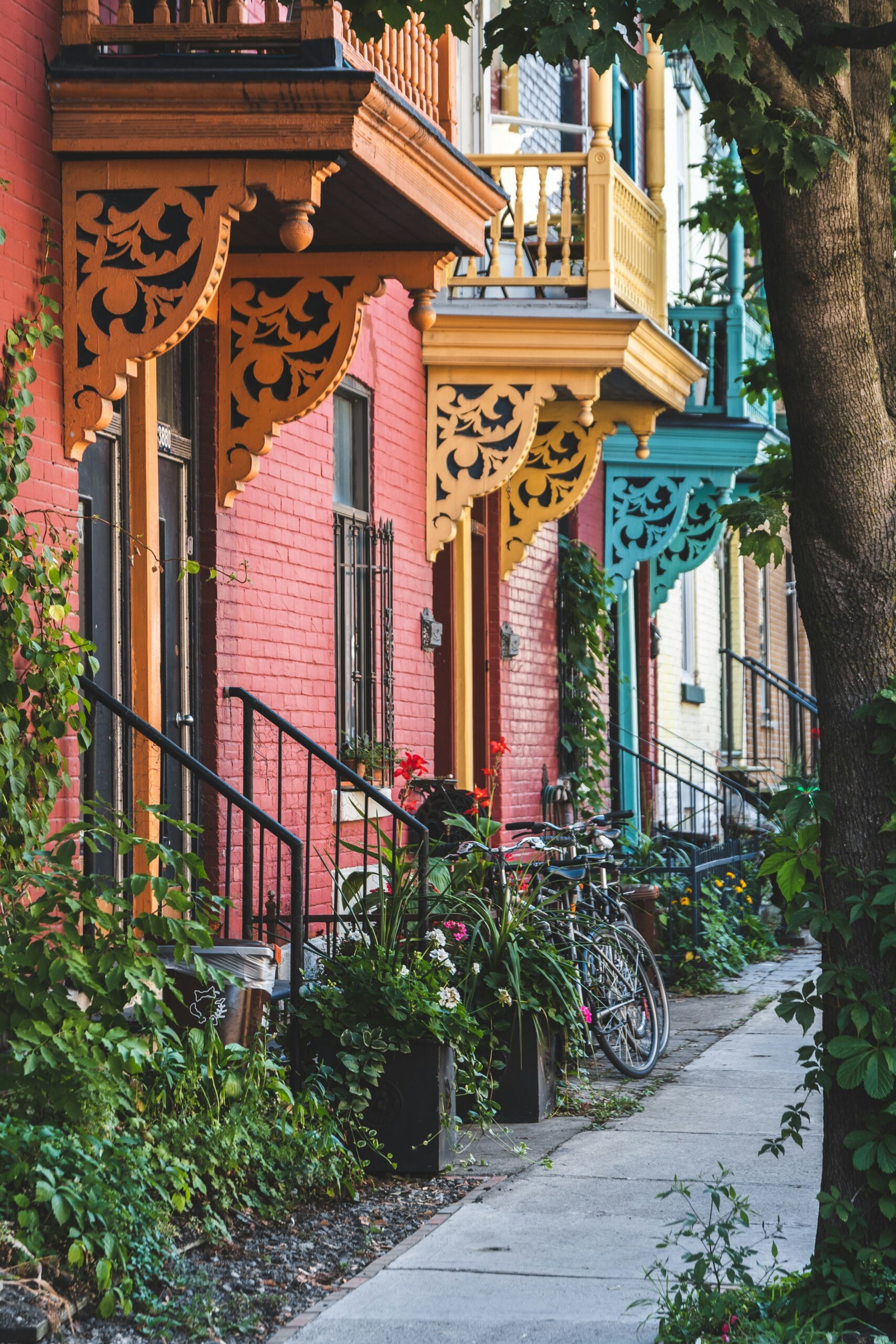
Plateau-Mont-Royal is popular with French expats for its cafés, shops, French-speaking atmosphere and lively local culture. It is central and pleasant, but rents are high and parking can be difficult, especially on moving day. Nearby Mile End appeals to creative professionals, technology workers and freelancers, although large family homes are scarce.

Outremont and Westmount suit higher-end residential moves. Outremont attracts French-speaking families, partly because of Collège Stanislas; Westmount is more English-speaking and attracts international executives and affluent families, with some of the city’s highest property costs.

Notre-Dame-de-Grâce (NDG), Rosemont–La Petite-Patrie and Verdun can offer a more family-friendly balance. NDG has larger homes and a bilingual atmosphere; Rosemont offers parks, shops and a strong community; and Verdun combines metro access, waterfront walks and often more manageable costs than the most sought-after central areas.

Côte-des-Neiges is convenient for students, researchers and healthcare workers associated with Université de Montréal, Polytechnique, HEC and major hospitals. Newer, high-rise Griffintown suits young professionals and executives working downtown.

  • Easygroupage tip: test school and work commutes rather than choosing a neighborhood solely for its reputation.
  • For deliveries, check truck access, exterior staircases, elevators and condominium rules.
  • In winter, living close to a metro station can significantly improve everyday comfort.

Starting from

1180 €
80+

Join the 1500+ expats who trusted us!

Donia, our moving expert, knows this destination inside out!
Our team can assist you in:
🇫🇷 Français • 🇬🇧 English • 🇪🇸 Español • 🇮🇹 Italiano • 🇵🇹 Português • 🇦🇪 العربية

Main Services

Living in Montreal

Housing, cost of living, employment, schools, transport and practical advice: discover the essentials for planning your move and everyday life in Montreal.

Housing and Cost of Living

Housing, budgets and mistakes to avoid

Housing is often the biggest challenge when moving to Montreal. Although the rental market shows some signs of easing, central and family-friendly areas remain popular. Plateau-Mont-Royal, Outremont, Griffintown and Westmount can be expensive, while Verdun, Rosemont, NDG and Côte-des-Neiges may offer a better balance of cost, space and public transport.

For newcomers, price is not the only issue. Landlords may ask for income documents, references or Canadian credit history, which you may not yet have. Temporary housing allows time to build an application, visit properties and avoid suspicious listings.

The cost of living in Montreal extends beyond rent. Displayed prices do not always include taxes; tipping is common in restaurants and certain services; and winter brings expenses such as warm clothing, heating if excluded from rent, winter tires, parking and snow removal. Living near the metro can significantly reduce monthly costs by making a car unnecessary.

For an international move to Montreal, check property access before shipping: elevators, outdoor staircases, doorway widths, delivery bookings, building regulations and truck parking. These issues matter especially in older buildings in the Plateau, Mile End and central neighborhoods.

  • Easygroupage tip: request detailed photos of access points before organizing delivery.
  • Never transfer money remotely without thoroughly verifying the property and landlord.
  • If possible, avoid the very busy July 1 moving period.

International Schools and Family Life

Settling in Montreal with children

Families should choose housing and schools together. In the French-language public system, the assigned school generally depends on your residential address. Before signing a lease, check the local school, required documents and enrollment deadlines, especially for children arriving during the school year.

The CSSDM is Montreal’s main French-language public school service center. Its newcomer reception process helps families organize registration. English-language public schooling is not automatically available to French children: eligibility depends on criteria including the Certificate of English Eligibility. Verify this before planning around an English-language school.

French families often consider Collège Stanislas, an AEFE-accredited French school in Outremont. It offers continuity with the French curriculum but influences neighborhood choice and housing costs. Outremont, NDG, Rosemont–La Petite-Patrie, Verdun and Westmount are frequently considered by families, each offering different balances of price, transport, schools and lifestyle.

Childcare also requires advance planning. Places in CPE early childhood centers and daycare facilities can be limited, even with Quebec’s centralized registration portal. Prepare school reports, birth certificates, identification, proof of residence and medical records before departure.

  • Easygroupage tip: check school options before committing to a home.
  • Apply for childcare as soon as your move to Canada becomes likely.
  • Expect higher housing costs and strong rental competition in Outremont and NDG.

Discover Canada’s major cities

Jobs and businesses in Montreal

Why Montreal attracts international professionals

Montreal appeals to expats through its dynamic job market, French-speaking culture and North American business environment. Key industries include artificial intelligence, video games, visual effects, aerospace, life sciences, clean technology, research and higher education. They attract engineers, researchers, digital specialists, entrepreneurs, students and international executives planning a move to Montreal.

Major employers include Ubisoft Montreal, CAE, Bombardier, Desjardins, National Bank, Hydro-Québec, the City of Montreal and the Quebec government, as well as hospitals such as CHUM and MUHC. McGill, Université de Montréal, Concordia, Polytechnique and HEC also attract international students, academics and researchers.

Professional integration involves more than translating a French CV. Quebec employers value networking, referrals, informal conversations and clear presentation of skills. Regulated professions, including healthcare, engineering and teaching, may require recognition of qualifications or registration with a professional order.

Professionals often choose neighborhoods according to their industry: Côte-des-Neiges for universities and hospitals; downtown and Griffintown for offices; the Plateau and Mile End for creative and tech jobs; and NDG or Outremont for established families.

  • Easygroupage tip: check local salaries, qualification recognition and processing times before moving to Canada for work.
  • Prepare a Quebec-style résumé and start networking before arrival.
  • Use Talent Montréal, Job Bank and specialist organizations such as CITIM to understand the local market.

Getting Around and Settling into Daily Life

Transport, formalities and everyday life

Transport strongly influences neighborhood choice in Montreal. The metro is the main reference point for newcomers: living near a station simplifies journeys downtown, to universities, hospitals and schools. STM buses complement the network, while ARTM coordinates public transport across Greater Montreal, including fare zones for Laval, Longueuil and surrounding areas.

A car is not essential in central neighborhoods such as the Plateau, Rosemont, Verdun, Côte-des-Neiges and downtown. It becomes more useful in the suburbs but adds insurance, parking, winter tires, snow removal and traffic costs. Cycling and BIXI are practical from spring through autumn, but winter changes travel habits considerably. Always test school and work commutes before choosing housing.

During the first days, prioritize a SIN for employment, RAMQ registration if eligible, banking, phone service, home insurance, school enrollment and temporary private health cover where needed. Building Canadian credit history takes time and can affect renting, phone contracts and credit-card applications.

Integration also happens through local life. Jean-Talon and Atwater markets, libraries, city activities, welcome organizations such as La Maisonnée, CSAI and CACI, and cultural events help newcomers establish connections. Montreal is French-speaking, but its administrative, business and consumer practices remain distinctly North American.

  • Easygroupage tip: prepare a first-30-days checklist covering temporary housing, SIN, banking, healthcare, school, phone and transport.
  • Get an OPUS card early if you use the metro or buses.
  • Keep digital and paper copies of important documents throughout your move.

Explore other destinations in North America

Frequently asked questions about moving to Montreal

Planning to settle in Montreal? Find answers to common questions about neighborhoods, housing, schools, the cost of living and organizing an international move so you can arrive in Quebec with confidence.

What are the best neighborhoods to live in Montreal?

It depends on your lifestyle. Outremont and NDG appeal to families for their schools and green spaces; the Plateau attracts French expats with its neighborhood atmosphere; and Verdun offers a good balance of affordability, transport and quality of life. Before signing a lease, compare housing, metro access and schools.

Can you live in Montreal without a car?

Yes, in most central neighborhoods. The metro, STM buses and BIXI bike-sharing make everyday travel easy. In outlying districts and suburbs, however, a car can be useful, especially in winter when weather can lengthen journeys.

Is it difficult to find housing in Montreal?

The rental market remains competitive, especially in sought-after neighborhoods such as the Plateau, Outremont and Griffintown. Newcomers without Canadian credit history may need additional supporting documents. Temporary accommodation on arrival often gives you time to find a permanent home without rushing.

Is Montreal suitable for families?

Montreal is a popular destination for French-speaking families thanks to its schools, respected universities, parks and quality of life. Plan school registrations and childcare applications well in advance, as places may be limited in some areas.

What should you know about an international move to Montreal?

Moving to Montreal means planning for customs formalities, sea freight lead times and local delivery constraints. Exterior staircases, narrow streets and the busy period around July 1 can complicate deliveries. Preparing with an international moving specialist makes settling in easier.

Montreal

Starting from

1180 €

Join the 1500+ expats who trusted us!

Message us on WhatsApp

Scan this code with your phone camera

EasyGroupage WhatsApp QR code

Prefer a quote?

Your move abroad

From

€1,000 all inclusive

or